PVC Boards for Home Interiors and Their Uses
October 21, 2026PVC Board Applications
7 Home Interior Myths that can make your process slow or fast
Choosing the right board can shape the durability, finish, upkeep and cost of a home interior project. Kitchen cabinetry, wardrobes, storage units, wall panels and ceiling designs each have different material requirements. The right choice can help reduce extra finishing work, improve fabrication planning and support long-term performance. Here comes one product that brings a solution to all these needs, with features that stand apart from conventional interior materials.
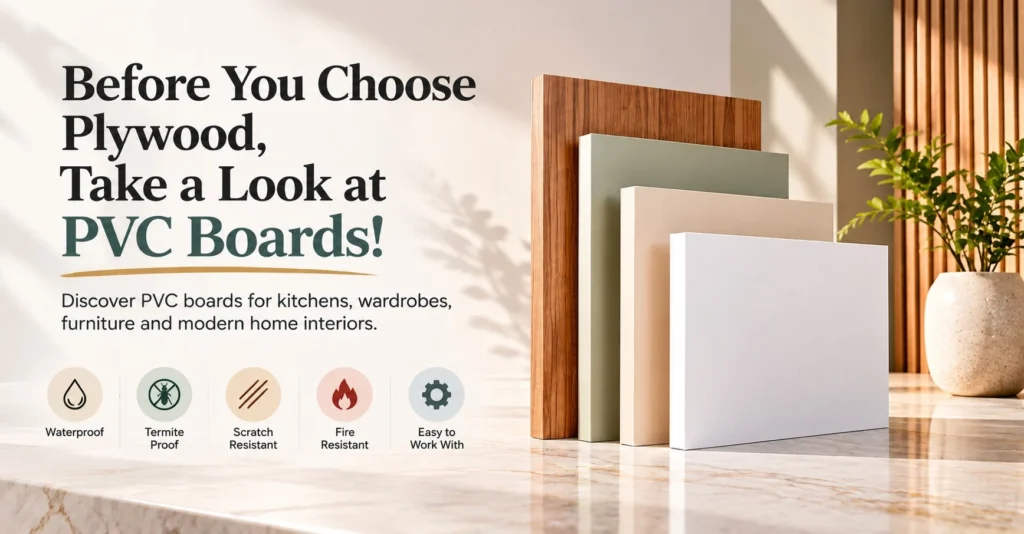
PVC boards for home interiors offer a practical option for selected furniture and decorative applications. Their material properties, maintenance needs and finish options make them worth considering during project planning.
Echon manufactures PVC blend-based engineered boards designed for specific building and interior applications. Through New Age Home, Echon's retail initiative, homeowners and interior professionals can assess products such as MasterBoard GOLD and MasterBoard Royal against their project needs.
The Evolution of Building Materials in Indian Homes
Selecting materials for residential interiors in India has traditionally meant choosing between commercial plywood, BWR/BWP marine plywood, or MDF. In Indian climate conditions—marked by severe seasonal humidity, damp masonry walls, plumbing seepage, and active pest colonies—plywood gradually degrades over time. Modern PVC and WPC boards deliver a solid, non-porous structure that never absorbs water, never warps under humidity, and offers absolute immunity to termites.
7 Home Interior Myths About PVC Holding You Back
Myth 1: PVC vs WPC Boards — Are They Really the Same Interior Material?
A widespread misconception among buyers, homeowners, and even experienced carpenters is treating PVC and WPC as identical materials. In reality, both represent specialized polymer formulations engineered for distinct functional applications across your living space.
- PVC Boards: Formulated from unreinforced or mineral-stabilized polymer blends, yielding lightweight, non-porous boards with outstanding surface smoothness. Because they are 100% waterproof, they are ideal for wet-area kitchen carcasses, under-sink vanities, bathroom storage, and decorative wall louvers.
- WPC Boards: Incorporate mineral reinforcements or wood-composite fibers directly into the polymer blend. This reinforcement substantially increases the board's tensile rigidity, thermal stability, and core density, making WPC the preferred structural choice for heavy-duty door frames (chaukhats), main entrance doors, and heavy furniture framing.
Echon manufactures PVC blend-based engineered boards using its material engineering expertise. Products such as MasterBoard GOLD and MasterBoard Royal are designed for selected building and interior applications, with product suitability determined by their technical specifications.
Myth 2: Polymer Materials Have Poor Mechanical Attributes (Screw Holding, Water & Fire Resistance)
Local contractors frequently advise against using polymer boards, claiming screws slip out over time, water damages board edges, or plastic catches fire easily. This misconception stems from unbranded, low-density foam sheets manufactured strictly for lightweight outdoor advertising signs rather than interior cabinetry.
- Screw Holding Capacity: High-grade interior polymer boards feature high core hardness and uniform structural density. When carpenters pre-drill standard pilot holes (approx. 70-80% of screw shank diameter) and drive parallel-thread screws, ECHON MasterBoard provides firm hinge grip that keeps kitchen doors and wardrobe shutters securely aligned over years of daily opening and closing.
- 100% Waterproof Performance: Unlike plywood that absorbs liquid through edge voids and delaminates, polymer structures absorb virtually zero moisture (< 0.7%). They remain completely immune to water damage, edge-swelling, and layer separation even during active plumbing leaks.
- Fire Safety & Self-Extinguishing Grade: Rigid PVC formulations naturally resist combustion due to their chlorine content. Carrying a Class B1 fire rating, the material stops burning immediately once the open flame source is removed, preventing flame spread along wall cavities.
- Permanent Termite Immunity: Because polymer boards contain zero organic wood cellulose, termites, wood-boring beetles, and fungal mold ignore them completely—offering lifelong protection without chemical sprays.
Myth 3: PVC is Plastic Looking
Architects and interior designers often hesitate to specify polymer wall paneling or cabinetry, operating under the outdated myth that PVC produces a cheap, glossy, plastic-looking finish that lacks aesthetic depth.
Surface technology has evolved far beyond raw white plastic sheets. Modern decorative surface finishes—such as Venya decorative panels and ECHON architectural louvers—utilize High-Definition Synchronized Embossed (EIR) surface texturing and premium matte or 5X high-gloss coatings. Advanced factory lamination reproduces the exact texture and visual depth of natural oak, rich walnut, brushed metals, and Italian marble without site painting or varnish coats.
Myth 4: PVC Boards Warps and Bends Under Heavy Loads
A frequent concern among homeowners, interior designers, and carpenters is that PVC boards lack the structural stiffness required for heavy-duty furniture, such as large wardrobe carcasses, long kitchen spans, heavy stone countertop supports, and tall storage cabinets, assuming they will bend, sag, or deflect over time under weight.
Deflection in cabinetry does not occur because of the raw polymer material itself, but when under-gauge, unreinforced low-density sheets are installed without standard structural support guidelines. Engineered polymer boards exhibit high tensile rigidity and flexural strength. When fabricated using appropriate board thicknesses (such as 18mm MasterBoard GOLD or MasterBoard Royal) along with standard vertical stiffeners and proper hardware spacing, polymer carcasses support granite slabs, quartz countertops, and heavy cast-iron cookware with zero structural bowing or sagging.
Myth 5: PVC Boards Are Dangerous in Fires
A deep-rooted myth in the market is that plastic-based interior boards are highly flammable hazards that catch fire rapidly, melt violently, and spread flames quickly across home interiors during electrical or kitchen fire accidents.
Unlike natural timber, plywood, MDF, or acrylic sheets—which are naturally combustible and feed oxygen to a fire—rigid PVC formulations are inherently flame-inhibiting due to their high chlorine content (derived from natural salt). ECHON PVC MasterBoards possess a self-extinguishing fire performance rating (Class B1 / UL-94 V-0 standards). When exposed to a direct flame source, the material will char without contributing to the flame, and the moment the external flame source is removed, the board stops burning immediately.
Myth 6: Carpenters Cannot Work on PVC Boards with Standard Tools
A common myth among traditional fabricators is that cutting, routing, and installing polymer boards requires specialized, expensive industrial machinery.
Standard woodworking tools—including circular saws, hand routers, jig saws, cordless drill drivers, and edge-trimmers—work seamlessly on ECHON polymer boards. Unlike plywood that splits at the edges or creates hazardous fine wood dust, PVC cuts cleanly without core chipping or splintering. Carpenters can plane, route, mill, CNC-engrave, and thermal-bend PVC boards using standard workshop equipment, saving labor effort on site.
Myth 7: All Engineered Boards Release Toxic Formaldehyde Fumes
Homeowners seeking healthy building materials often group all manufactured boards together, assuming PVC and WPC emit volatile organic compounds (VOCs) similar to MDF or particle boards.
Traditional particle boards, MDF, and commercial plywood rely heavily on urea-formaldehyde or phenol-formaldehyde glues that continuously off-gas toxic fumes into enclosed bedroom and kitchen spaces. High-grade ECHON PVC boards are manufactured using lead-free formulations and non-toxic polymer resins. They emit zero formaldehyde VOCs, meet strict indoor safety standards, and are completely safe for children's bedrooms, wardrobes, and food storage areas.
Technical Performance & Specification Matrix
Practical Applications for Modern Indian Spaces
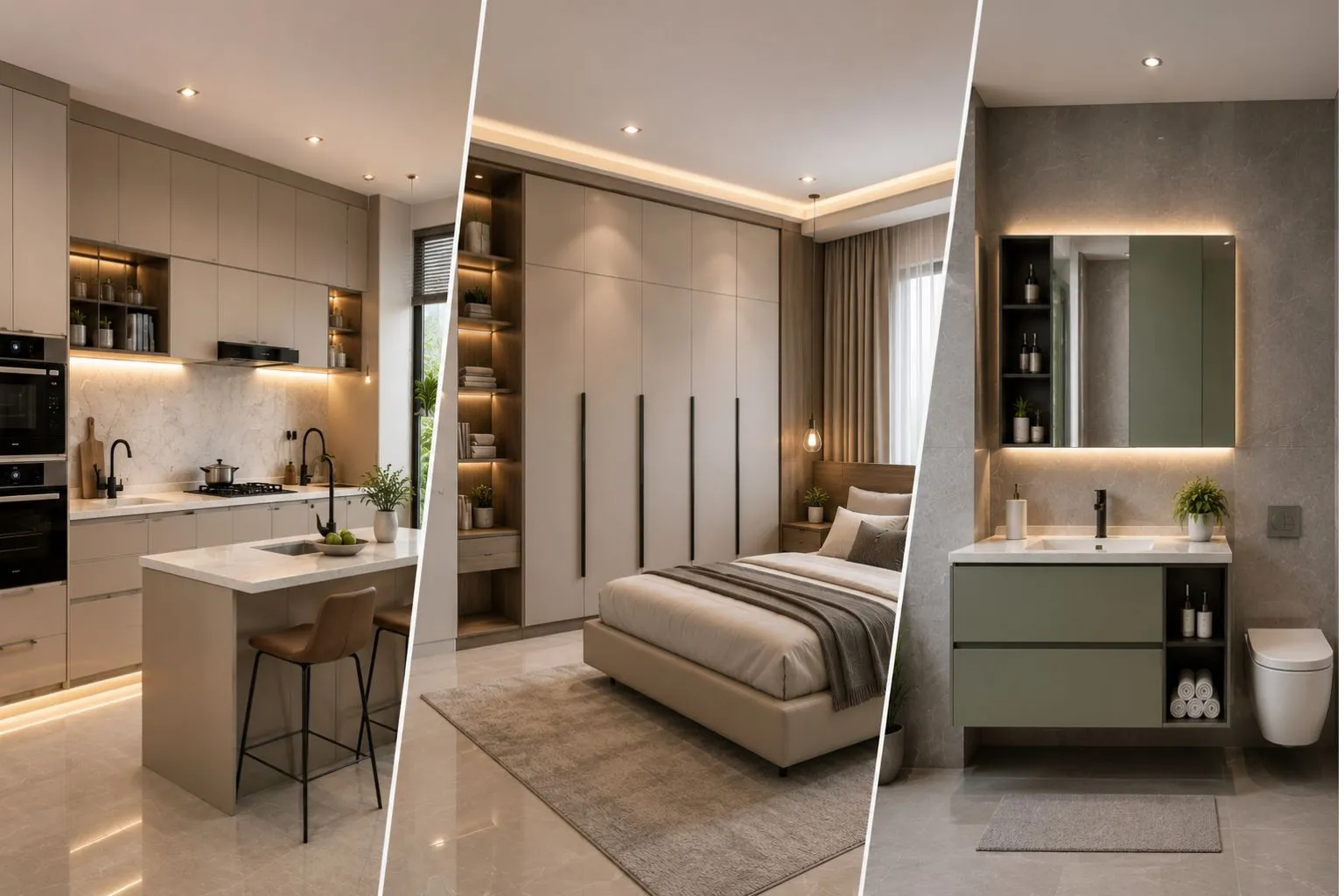
- Modular Kitchen Carcasses & Sink Units: Carcasses under the kitchen sink built with ECHON MasterBoard never rot, smell, swell, or delaminate during plumbing leaks.
- Bathroom Vanities & Utility Storage: Keep toiletries, towels, and cleaning chemicals safe inside 100% waterproof PVC cabinets that handle direct water contact effortlessly.
- Main Entry Doors & Frames: Replace wooden chaukhats with SafeStrong pre-hung door frames that never jam, swell, or warp during heavy monsoons.
- Decorative Wall Accents: Utilize pre-finished Venya fluted louvers to create modern accent walls in living rooms without messy site paint work.
Why Choose New Age Home by ECHON
New Age Home is the retail experience arm of ECHON (Kumar Arch Tech Ltd.), India's premier manufacturer and exporter of PVC blend-based building materials. Sourcing directly through New Age Home guarantees factory-direct access to MasterBoard sheets, SafeStrong pre-hung doors, and Venya decorative wall panels backed by over 22 years of polymer extrusion excellence.


Who Should Work With Us
Businesses looking to Buy PVC Boards in India can partner with New Age Home for reliable supply and consistent quality. We work with architects, interior designers, builders, contractors, distributors, dealers, fabricators, furniture manufacturers, and project developers across India. Whether you need materials for residential, commercial, or large-scale projects, our factory-direct supply, dependable availability, and technical support help keep your projects moving efficiently.
HAVE AN ENQUIRY?
CONTACT US